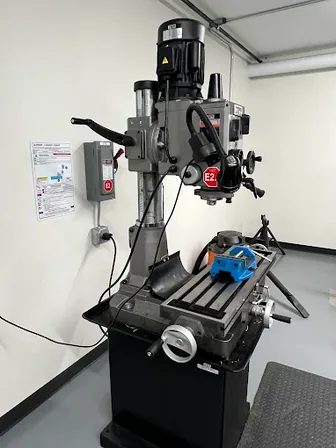
Custom Lockout Tagout Placards Built for Your Equipment

A generic "LOCKOUT" sign will not pass a 1910.147(c)(4) inspection. The standard requires the procedure to identify the specific energy sources for that specific machine, in the sequence they must be isolated. A placard that does not do that is decoration, not compliance. Our placards are built to the exact specs of your equipment, on industrial coated aluminum, installed at point of use.

OSHA 1910.147 Compliant
ANSI Z535 Compliant
ISO Compliant
Chemical Resistant
200+ Year Lifespan

Why Generic Placards Fail an OSHA 1910.147 Inspection

OSHA's lockout tagout standard requires documented, equipment-specific energy control procedures for every machine with hazardous energy. A generic "de-energize before service" sign does not satisfy (c)(4).

Each procedure must identify the specific energy sources on that machine, the sequence for de-energization, the type and magnitude of energy, and the method of control. Every machine gets its own placard.

Common audit finding: Facilities using generic placards or paper procedures are consistently cited for failing the machine-specific written procedure requirement of 1910.147(c)(4). (c)(4) is one of the three most-cited sub-clauses under 1910.147 in OSHA enforcement data.

Our custom placards are built from the actual specifications of your equipment. We work directly with your maintenance team and coordinate with OEMs when needed to gather the exact data required.
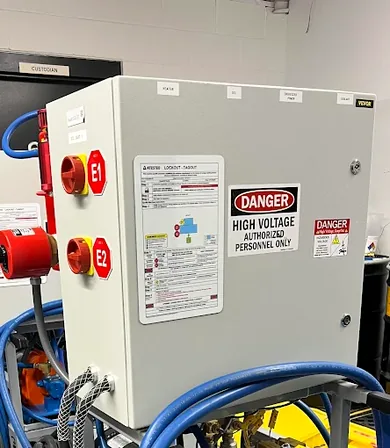
What a Machine-Specific LOTO Placard Must Include

  • Equipment identification and location
  • Each energy source type (electrical, hydraulic, pneumatic, thermal, etc.)
  • Magnitude and method for each energy source
  • Step-by-step shutdown and isolation sequence
  • Lockout device type and location for each energy point
  • Verification steps to confirm zero energy state under (d)(6)
  • Re-energization sequence

LOTO Placards and Access Signs for Every Application

Every product is customized to your equipment and facility, built to industrial-grade specifications, and compliant with OSHA, ANSI Z535, and ISO standards.

Machine-Specific LOTO Placards

The core product. Custom-designed for each piece of equipment, covering all energy sources, isolation points, and lockout sequences. Built from your machine data, installed accurately the first time.

Single Point Identifiers

Visual markers for individual isolation points within a system. Technicians can identify each de-energization point without confusion, even on complex multi-source equipment.

Robotics and Automation Access Placards

Custom placards for automated interlock gated entry systems. Identifies authorized personnel, outlines steps required before entry, and specifies which tasks can be performed without full LOTO procedures. Commonly missed requirement for facilities with robotic cells.

Frequently overlooked: Facilities with robotic and automated systems often miss the placard requirements for interlock gated entry. A growing area of OSHA enforcement as automation adoption increases.

Custom Machine and Asset Tags

Custom tags for clear machine and asset identification. Manufacturer, machine number, rated capacity, and relevant tooling or maintenance info. Supports both safety and operational efficiency.

Material Specifications

  • High-color coated aluminum substrate
  • UV-protected laminate per ANSI Z535 contrast and header-height specs
  • Industrial-grade adhesive backing
  • Chemical resistant surface
  • Weather and UV resistant for indoor or outdoor use
  • Heat resistant for high-temperature environments
  • Easy-clean, smooth surface that resists dirt and grime
  • Rated lifespan of 200-plus years
  • Vibrant, long-lasting color that stays readable for decades

Paper and Laminate Fail in Industrial Environments

ANSI Z535 sets contrast ratios and minimum header height. Industrial-grade aluminum with UV-protected laminate survives wash-down, caustic cleaners, and outdoor mount locations without fade for 10-plus years in the field conditions documented by NFPA signage guidance.

Paper LOTO procedures tear, fade, and become illegible under oil, chemicals, and heat. Laminated placards peel, crack, and warp. When a procedure is unreadable, the equipment cannot be serviced safely and your facility is exposed to safety risk and compliance failure at the same time.

High-color coated aluminum holds up to the same chemicals, temperatures, and conditions your equipment operates in. A placard that lasts 200 years is a placard that never needs to be replaced due to material failure.

Installation is handled by our team with industrial-grade adhesive backing that bonds permanently to equipment surfaces, eliminating the risk of a placard falling off or being removed.

Get Your Facility Assessed

From Your Equipment to a Fully Compliant Facility

We handle the whole process so your team stays on production, not paperwork.

1

On-Site Information Gathering

Our team visits your facility and collects required machine data, energy source information, and isolation point details. We work with your maintenance team and coordinate with OEMs when needed.

2

Custom Placard Design

Each placard is designed to your specific equipment specs using CAD tools. Content verified against 1910.147 before production.

3

Production

Placards produced on industrial-grade aluminum with high-color print and permanent adhesive backing. Every placard is quality-checked before shipping.

4

Accurate Installation

Our team installs every placard in the correct location on each machine. Precise placement means employees can find and read procedures quickly during maintenance tasks.

5

Documentation and Annual Review

Every procedure is stored in our LockStep compliance software, giving you centralized, auditable documentation. Annual reviews are scheduled automatically to keep procedures current.

6

Ongoing Support

Add new equipment or modify machines and we update procedures and placards. Your LOTO program stays current without eating internal bandwidth.

Frequently Asked Questions About LOTO Placards

Does OSHA actually require a placard on every piece of equipment?

Yes. 1910.147(c)(4) requires a documented, written energy control procedure for every machine or piece of equipment with the potential for unexpected energization, startup, or release of stored energy. Generic procedures are allowed only in narrow circumstances where equipment and process are exactly identical. For most facilities, every machine needs its own procedure.

We have LOTO procedures on paper. Do we need to replace them?

If the content is accurate and current, the procedure may be compliant. The issue is the medium. Paper degrades in industrial environments and becomes unreadable. Inspectors look for procedures that are accessible and legible at the point of use. Durable placards mounted on equipment are the standard that passes inspection.

How long does a full facility placard project take?

Depends on number of machines and facility complexity. Most mid-sized facilities with 50 to 200 machines complete on-site data collection and installation within a few weeks. We provide a detailed project timeline during the assessment phase before any commitment.

What happens when we add new equipment or modify machines?

New or modified equipment requires updated LOTO procedures. We provide ongoing support to update placards and documentation whenever your equipment changes. All procedures are stored in LockStep, so updates flow through quickly.

Do you handle robotics and automation LOTO requirements?

Yes. Robotic cells and automated systems carry LOTO and access control requirements that differ from standard equipment under ANSI/RIA R15.06. We specialize in access control placards for automated interlock gated entry, which is one of the most commonly missed requirements. See the robotics access placards section above for detail.

Ready to Get Your Facility into Full LOTO Compliance?

Start with a free compliance assessment. We identify every gap in your current LOTO program and outline exactly what needs to be done.

Request a Free Assessment

or call (847) 232-6067