Lockout Tagout Gap Analysis: Know Exactly Where You Stand Before OSHA Does

Most facilities fail their own LOTO audit and do not know it. The program was written when the plant had fewer machines, or by someone who left two plant managers ago, and nobody has re-mapped it since. Our on-site LOTO gap analysis fixes that: every deficiency, mapped to 1910.147 and ANSI Z244.1, in a written report.

Quick answer: A LOTO gap analysis is an on-site assessment that compares your energy control program against OSHA 1910.147 and ANSI Z244.1, machine by machine, and returns a written report of every deficiency mapped to the exact citation. It is how a facility finds its compliance gaps before an OSHA inspector does.

On-Site Assessment
OSHA 1910.147 Crosswalk
Actionable Findings Report
Regulatory Mapping
Full-Service Remediation Available

A Gap Analysis Shows You Every LOTO Deficiency Before an Inspector Does

Most facilities believe their LOTO program is compliant. Most are wrong in at least one significant area. An on-site gap analysis is the only reliable way to know.

Our certified safety specialists walk your facility, examine every piece of equipment with hazardous energy sources, and evaluate existing procedures, placards, documentation, and training records against 1910.147, ANSI Z244.1, and applicable ISO standards.

What you get back is not a general recommendation. It is a machine-by-machine, requirement-by-requirement breakdown of what is compliant, what is not, and exactly what needs to be corrected. Every finding is mapped to the specific regulatory citation so you know the exposure you are carrying.

Who needs this most: Facilities that have never had a formal LOTO assessment, facilities where procedures were written internally without regulatory expertise, or facilities that recently added new equipment or automation. Food and beverage plants running nightly contract sanitation crews are another common fit.
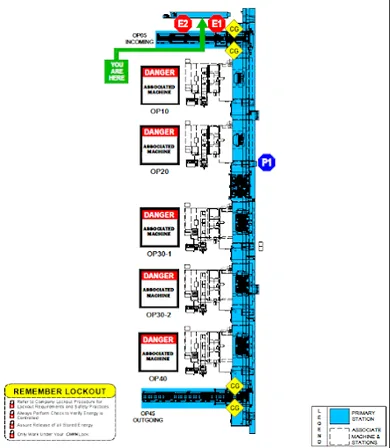
Process line LOTO map showing operations OP05 through OP45 with associated machines and lockout reminders, the kind of facility-level visibility a gap analysis produces

What the Gap Analysis Evaluates

  • Written energy control program documentation
  • Machine-specific procedure completeness and accuracy against (c)(4)
  • Placard material quality and durability
  • Placard placement and accessibility at point of use
  • Coverage of all machines with hazardous energy sources
  • Robotics and automated interlock access placard compliance
  • Annual procedure review records under (c)(6)
  • Employee training documentation under (c)(7)
  • Lockout device adequacy and availability
  • Coordination procedures for multi-energy or multi-employer scenarios
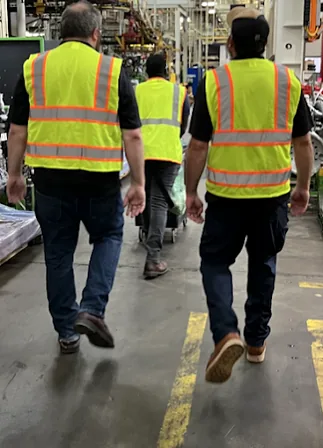
Trained safety professionals walking a manufacturing floor in high-visibility vests during an on-site LOTO gap analysis

What a typical finding looks like: The last gap analysis we ran found 43 energy-isolating devices on the plant floor that had no corresponding written procedure. The facility had been operating under the assumption that their "master procedure" covered everything. It didn't. Counts like that are common on first assessments, which is why a walkthrough before the inspector arrives is almost always worth more than a remediation after.

Two Levels of LOTO Gap Analysis

Choose the assessment that fits, from a targeted signage review to a full regulatory crosswalk of your entire safety operation.

Safety Sign Gap Analysis

Targeted review of your safety signage

  • Site inspection for missing or inadequate safety signage
  • Identification of every hazard area without proper warning signage
  • Review of LOTO placard coverage across all equipment
  • Assessment of PPE signs, emergency device locators, and evacuation maps
  • Detailed report with specific recommendations for each deficiency
  • Prioritized list of corrective actions by compliance risk
Schedule This Assessment

Full Safety Operations Gap Analysis with Regulatory Crosswalk

Full review of your safety operation

  • Everything in the Safety Sign Gap Analysis
  • Review of written energy control program against 29 CFR 1910.147
  • Evaluation of operational procedures, equipment, and practices
  • Regulatory crosswalk mapping current state against OSHA, ANSI Z244.1, and ISO requirements
  • Identification of non-compliance areas with specific sub-clause citations
  • Actionable remediation recommendations with priority ranking
  • Strategies to improve overall safety and operational efficiency
Schedule This Assessment

When a Gap Analysis Is Most Valuable

Before an OSHA Inspection

If you know an inspection is coming, or you are in an industry that gets inspected regularly, a gap analysis lets you identify and correct findings before the inspector does. Remediation always costs less than citations.

After a New Facility Opens or Expands

New facilities often start with informal or incomplete LOTO programs. A gap analysis establishes the baseline and flags everything that needs to be built out before operations scale.

After Adding Robotics or Automation

Robotic cells and automated systems bring LOTO and access control requirements that existing programs rarely address. Adding automation without updating your LOTO program creates immediate compliance gaps.

After a Corporate Safety Mandate

When leadership pushes for standardized safety practices across all facilities, a gap analysis at each location gives you the data to build a centralized remediation plan.

After a Near-Miss or Safety Incident

An incident involving hazardous energy almost always reveals a gap in the LOTO program. A formal gap analysis documents what went wrong and provides the corrective action framework required for internal and regulatory purposes.

During Annual Budget Planning

A gap analysis gives you the documented evidence you need to justify capital investment in safety improvements. It converts compliance risk into business risk that leadership understands.

What You Receive After Your Gap Analysis

The assessment is not a visit and a verbal debrief. You receive a formal, documented report that doubles as a compliance roadmap and an internal justification document.

  • Detailed findings report with every gap documented by equipment and location
  • Regulatory crosswalk mapping each finding to the specific OSHA sub-clause
  • Risk priority ranking so you know what to fix first
  • Actionable recommendations for each finding
  • Estimated scope for remediation (how many placards, what services)
  • Documentation suitable for sharing with EHS leadership or corporate safety teams

After report delivery, we are available to handle remediation end to end, from building custom placards to completing the full-service LOTO program. Or you can take the report and act on it internally.

What most facilities discover: The majority of facilities we assess have three consistent gaps. Paper or laminated placards that do not meet durability standards. Incomplete procedures for multi-energy equipment. No compliant access placards for robotic or automated systems.

After the Gap Analysis: What's Next

  • Custom LOTO Placards built for every machine with a gap
  • Full energy control program development and documentation
  • Annual LOTO Audit program set up for ongoing compliance
  • LockStep software for centralized, auditable documentation
  • Employee training on updated procedures

Gap Analysis Questions, Answered

What does a LOTO gap analysis evaluate?

The written energy control program, machine-specific procedure completeness against 1910.147(c)(4), placard quality and placement at the point of use, robotics and interlock access placard coverage, annual review records under (c)(6), training documentation under (c)(7), lockout device adequacy, and coordination procedures for multi-employer work.

What do we receive at the end of the gap analysis?

A machine-by-machine, requirement-by-requirement written report. Every finding is mapped to the specific sub-clause of 1910.147 or ANSI Z244.1 it falls under, so you know exactly what exposure you carry and what to correct first.

Who needs a LOTO gap analysis most?

Facilities that have never had a formal LOTO assessment, facilities where procedures were written internally without regulatory expertise, and facilities that recently added new equipment, robotics, or automation.

What levels of gap analysis are available?

Two levels: a targeted Safety Sign Gap Analysis covering signage and placard coverage, and a Full Safety Operations Gap Analysis with a complete regulatory crosswalk of your safety operation.

Find Out Where Your LOTO Program Stands

Request a gap analysis and get a clear picture of your compliance exposure before your next audit or inspection.

Schedule a Gap Analysis

or call (847) 232-6067